Screen-Free Family Evenings Checklist for Calmer Nights
Screen-Free Family Evenings: A Printable Checklist for Calmer Nights and Stronger Connection
Evenings can disappear into homework, chores, and “just one more episode.” A simple plan makes it easier to reset. This screen-free family evenings checklist is designed to reduce decision fatigue, offer age-flexible activity ideas, and help families build a repeatable rhythm that feels fun—not forced.
What a Screen-Free Evening Looks Like (Without Making It Complicated)
A screen-free evening doesn’t have to be an all-night production. It works best when it’s small, predictable, and easy to repeat—more like a family “mini ritual” than a special event.
- Choose a clear start and end time so expectations stay realistic (try 45–90 minutes).
- One shared activity beats a packed schedule; the goal is connection, not perfection.
- Create a simple “parking spot” for devices (basket, drawer, or charging station) to prevent constant check-ins.
- Use a predictable flow to help kids transition: connect → play → wrap up → prep for tomorrow.
- Keep it flexible with quieter options for tired days and energetic options for high-energy days.
If you want extra structure, the American Academy of Pediatrics’ Family Media Plan is a helpful reference for setting household expectations without turning it into a power struggle.
The Checklist System: Set Up Once, Reuse Every Week
The easiest way to make screen-free nights stick is to remove daily negotiation. A light “system” keeps it moving, even when adults are tired and kids are wiggly.
- Start with 2–3 evenings per week (or even 1–2 if life is hectic). Consistency builds buy-in.
- Pick theme nights to reduce choices: game night, story night, kitchen night, craft night.
- Create an activity shelf with supplies that live together (cards, dice, paper, markers).
- Assign tiny roles so everyone participates (snack helper, music picker, clean-up captain).
- End with one reflection question: “What was your favorite moment?”
Screen-Free Evening Flow (Copy/Paste Into a Family Routine)
| Step | Time | What to Do | Low-Prep Ideas |
|---|---|---|---|
| Reset | 5 min | Put devices away, tidy one small area, set out supplies | Device basket + quick room sweep |
| Connect | 10 min | Check-in question round | High/low of the day, gratitude, “tell a funny moment” |
| Do | 25–45 min | Main activity | Board game, scavenger hunt, craft, cooking, backyard play |
| Close | 5–10 min | Wrap up and preview tomorrow | Pick next activity, pack backpacks, lay out clothes |
Fun Screen-Free Activity Ideas (Mix-and-Match by Mood)
Keep a short list your family already likes. When someone says “I’m bored,” you can point to two options and move forward.
- Quick wins (10–20 minutes): charades, 20 questions, mini dance party, card games, puzzle sprint.
- Creative: draw-and-pass doodles, paper airplane challenge, collage night, family photo-story (using printed photos).
- Movement: obstacle course, hallway bowling, balloon volleyball, flashlight tag, yoga stretch routine.
- Kitchen: build-your-own tacos, homemade trail mix, decorating fruit plates, “chef picks” taste test.
- Calm-down options: read-aloud chapter time, audiobook + coloring, simple origami, guided breathing for kids.
For more ideas that support a warm, steady parenting approach, the CDC’s Positive Parenting Tips page is a solid resource.
Making It Work for Different Ages (Toddlers to Teens)
Screen-free time is most successful when it feels age-appropriate—especially for older kids who can spot “babyish” activities instantly.
- Toddlers/preschool: shorter blocks, sensory bins, simple turn-taking games, picture-book routines.
- Elementary: cooperative games, LEGO challenges, scavenger hunts, simple science demos with household items.
- Tweens: cooking challenges, family trivia, podcast discussion, mini “room refresh” projects (declutter one drawer).
- Teens: let them choose the activity once per week; include options with dignity (card games, mocktail bar, music sessions).
- Mixed ages: assign older kids as rotating “activity leaders” to help younger siblings stay engaged.
Common Roadblocks and Easy Fixes
- “I’m bored.” Offer two pre-approved choices instead of an open-ended question.
- Late work nights. Use the 20-minute version (connect + one quick activity + close).
- Pushback about devices. Agree on a visible end time and a consistent next-day check-in.
- Different energy levels. Keep one calm and one active option ready each night.
- Mess concerns. Go low-mess on school nights; save crafts for weekends.
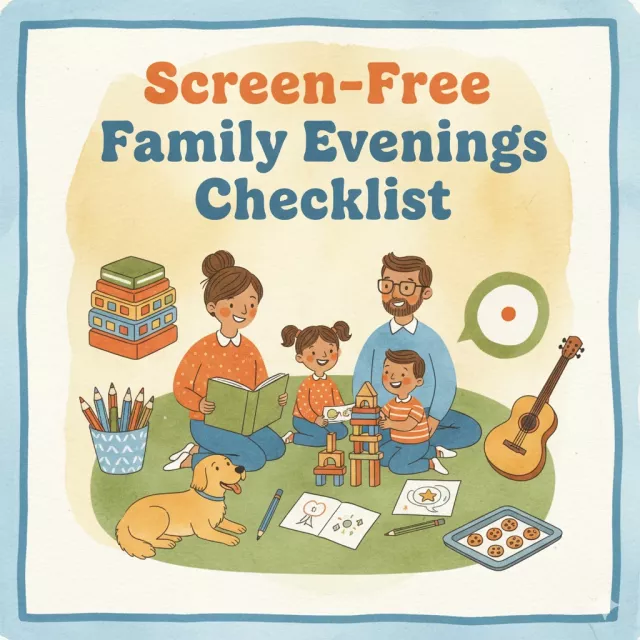
Printable Digital Download: Screen-Free Family Evenings Checklist
If your biggest hurdle is the nightly “what should we do?” conversation, a printable routine can make it easier for everyone to follow the same plan.
- A ready-to-use checklist format that supports repeatable routines.
- Designed for parents and kids to use together—simple, clear, and easy to print.
- Works as a weekly rhythm tool: pick nights, choose activities, and track what felt best.
- Helps reduce decision fatigue and keeps screen-free time from feeling random.
Screen-Free Family Evenings Checklist (digital download)
Optional Add-On for a Calmer Home Environment
If pets are part of your household—and their anxiety affects everyone’s downtime—this guide can complement a calmer evening rhythm: Calm Paws: Ending Dog Separation Anxiety.
FAQ
How many screen-free evenings per week is realistic to start with?
Start with 1–2 evenings per week and keep the first sessions short. Once it feels routine (not like a special event), add more nights if your family wants to.
What counts as “screen-free” if music or audiobooks are used?
Audio can still fit the spirit of screen-free time if it supports shared connection and no one is scrolling or gaming. When possible, use a smart speaker or offline audio so devices stay “parked.”
What if kids refuse to participate?
Keep stakes low and offer two choices rather than asking an open-ended question. Rotate who picks the activity, start with short fun options, and stick to predictable start/end times so it becomes familiar.














Leave a comment