Stronger Together: Easy Family Bonding at Home & Outside

Stronger Together: A Simple Plan for Meaningful Family Time at Home and Outdoors
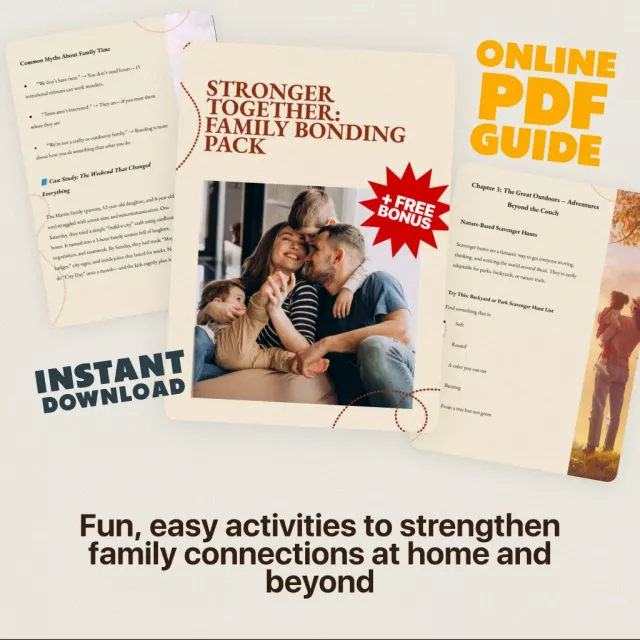
Busy schedules, devices, and divided attention can make connection feel like something that has to be “planned.” Stronger Together: Family Bonding Pack turns that pressure into a doable routine with printable activities, outdoor ideas, and an easy checklist that helps families create small, repeatable moments of closeness—without needing a big budget or elaborate prep.
Family routines matter because they create predictability and repeated opportunities to reconnect, even during hectic seasons. If screens are part of the challenge, it also helps to set clear, realistic expectations around media so “together time” is actually together. Resources like the American Psychological Association’s guidance on family routines and the American Academy of Pediatrics media toolkit reinforce the same theme: small habits, repeated often, make a big difference.
What the Stronger Together Family Bonding Pack Includes
Designed for real-life energy levels (and real-life calendars), the Stronger Together: Family Bonding Pack focuses on simple actions that build familiarity, warmth, and teamwork.
- Digital format designed for quick access and easy re-use
- Printable at-home activities that encourage conversation, teamwork, and shared laughter
- Outdoor connection ideas for walks, parks, backyards, and simple local adventures
- Family time checklist to keep momentum going week to week
- eBook-style guidance to help parents choose activities that fit the day’s energy and time available
Because it’s digital, the pack works well as a “grab-and-go” option: print a few pages, save the rest for later, and repeat favorites when you need an easy win.
Who It’s For (and When It Helps Most)
Not every family needs more activities—many need fewer choices and a clearer starting point. This type of structured, flexible toolkit fits especially well when decision fatigue is high.
- Parents who want structured ideas without over-scheduling the family
- Kids who benefit from predictable connection time and shared attention
- Families rebuilding routines after a move, new school year, travel, or a busy season
- Weekends when everyone is home but no one can agree on what to do
- After-school windows that are short but ideal for quick wins (10–30 minutes)
If your household is trying to shift from “parallel play” (everyone in the same room, different screens) to shared moments, having a ready-made menu reduces friction and makes it easier to start.
A Low-Stress Weekly Rhythm for Bonding
Consistency beats intensity. A weekly rhythm works best when it feels light enough to maintain—especially during school weeks.
- Start small: pick 2–3 activities for the week instead of trying to do everything at once
- Mix formats: choose one at-home activity, one outdoor activity, and one “micro-connection” option for busy days
- Use the checklist as a visual cue that connection is a family priority, not an afterthought
- Rotate leadership: let kids “host” an activity sometimes to boost buy-in and confidence
- Keep a consistent time anchor (after dinner, Saturday morning, or Sunday afternoon) to reduce decision fatigue
Example Weekly Plan Using Printable Activities + Outdoor Connection
| Day | Time Needed | Setting | Example Activity Type | Goal |
|---|---|---|---|---|
| Monday | 10–15 min | At home | Quick conversation prompt / mini-game | Reconnect after the day |
| Wednesday | 20–30 min | At home | Team challenge or collaborative activity | Practice teamwork |
| Friday | 15–25 min | At home | Family check-in + checklist review | Celebrate wins, plan weekend |
| Saturday | 30–60 min | Outdoors | Walk, scavenger-style activity, park challenge | Shared adventure |
| Sunday | 15–30 min | At home | Reflection / gratitude / planning | Close the week with connection |
At-Home Ideas That Feel Special Without Being Complicated
Home bonding goes best when it doesn’t feel like another “project.” The goal is a short window where everyone is present and participating—no perfection required.
- Use printables as “activity starters” when everyone is tired of deciding
- Set a single house rule for the activity window (for example: devices away for 20 minutes)
- Pick activities that match the mood: calming choices for overstimulated days and energetic choices when kids need to move
- Keep materials simple: paper, markers, tape, timer, and a few household items cover most needs
- Create a “bonding folder” where completed pages can be saved as a memory stack
A practical tip: build a two-minute “start cue” that signals the shift. It can be as simple as clearing the table, putting one page in the center, and letting the day’s “host” read the prompt out loud.
Outdoor Connection Activities That Work Almost Anywhere
For families who enjoy tech-based hobbies outdoors, a shared “learning activity” can also be bonding—especially when kids get a chance to teach. If that fits your style, something like the SG109 Max 2 4K FPV Camera Drone with 3-Axis Gimbal & Obstacle Avoidance can turn a simple park visit into a collaborative mission (planning flight time, taking turns, and reviewing footage together). Keep rules clear and safety-first, and treat it as a group activity rather than a solo gadget.
Making the Checklist Actually Stick
Getting Started in 15 Minutes
If you want extra guidance on positive parenting habits that support connection, the CDC’s positive parenting tips offer practical, age-aware reminders you can weave into these routines.
FAQ
How long should family bonding activities take to be effective?
Short, consistent sessions (about 10–30 minutes) can be highly effective because they’re easier to repeat. Pair a few quick weekday connections with one longer weekend activity to keep the rhythm sustainable.
Is this better for younger kids or older kids?
It works for both because the prompts and challenges can be adjusted by age and personality. Older kids often respond well when they get choices or a leadership role, especially for outdoor activities.
Do the activities require special supplies or a big budget?
No—most options can be done with common household items and free local outdoor spaces. Printing only what you need for the week keeps it simple and low-cost.















Leave a comment