Smart Wi‑Fi Air Purifier for Large Rooms: Alexa + PM2.5
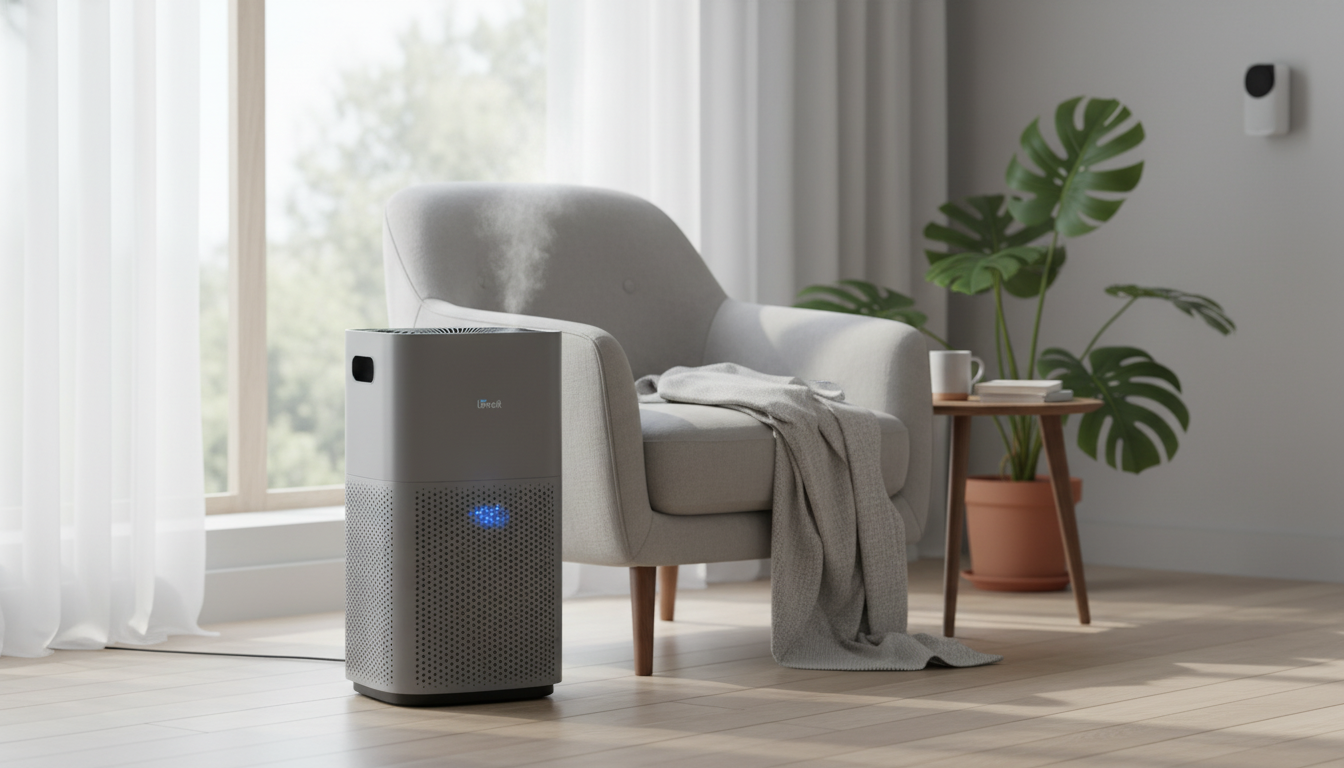
Smart Wi‑Fi Air Purifier for Large Rooms with Alexa and PM2.5 Monitoring
A connected air purifier can take the guesswork out of daily air care by combining automated fan control, real-time particle readings, and app-based scheduling. For larger rooms, coverage and filter design matter just as much as smart features. This guide breaks down what to look for and how a Wi‑Fi model with Alexa support, PM2.5 monitoring, and a 3‑in‑1 filter fits into an everyday home setup.
What makes a smart air purifier different
Traditional purifiers often feel like “set it and hope” appliances. A smart model is designed to be managed and understood—without hovering over the buttons.
- Remote control from a phone app for power, fan speed, modes, and schedules—useful when you’re away or already in bed.
- Voice control through Alexa for hands-free adjustments during cooking, cleaning, or bedtime routines.
- Automation based on particle readings so fan speed can respond to changing air conditions instead of staying fixed all day.
- Status visibility at a glance: current air-quality indicator, active mode, and (when supported) filter reminders that reduce maintenance surprises.
Room coverage and placement for faster results
Large-room performance depends on moving enough air through the filters. Even a great purifier can underperform if it’s placed where airflow is restricted.
- Match purifier capacity to room size. Larger rooms typically need higher airflow to noticeably reduce particles, especially during events like cooking or smoke intrusions.
- Place the unit where air can circulate: avoid pushing it against curtains or tucking it behind large furniture; leave clearance around the intake and outlet.
- For bedrooms, keep it near the breathing zone but not blocked by nightstands or bedding; for living rooms, prioritize central airflow paths rather than corners.
- Keep doors and windows consistent with the goal: closed for rapid cleaning, open if the priority is ventilation rather than filtration.
For general indoor air guidance, the EPA and CDC both emphasize using appropriately sized air cleaners and operating them consistently during higher-risk periods (EPA: Air Cleaners and Air Filters in the Home, CDC: Air Cleaners and Air Filters).
PM2.5 monitoring: what it tells you and how to use it
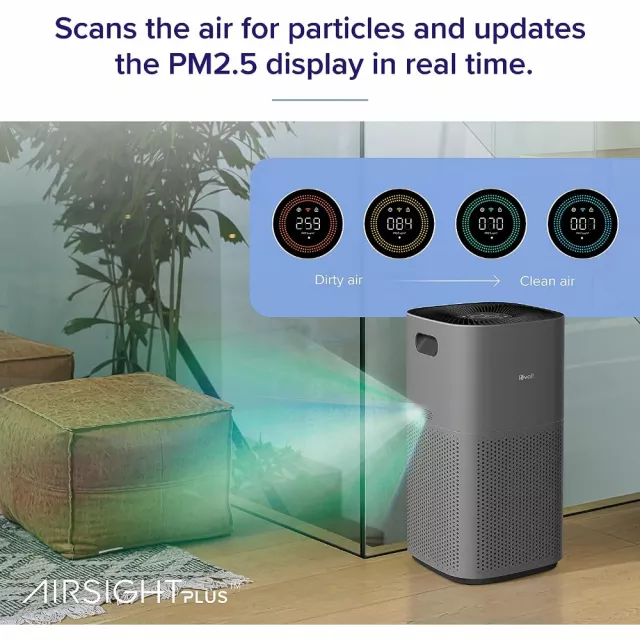
PM2.5 refers to fine particles that can come from smoke, cooking, traffic pollution, and dust. Because they’re often invisible, monitoring is less about “perfect numbers” and more about catching changes you’d otherwise miss.
- Use readings to time higher fan speeds during cooking, vacuuming, candle use, or wildfire-smoke days.
- Treat the PM display as a trend tool: watch how quickly levels drop after the purifier ramps up, and how fast they rise after a known trigger.
- If numbers stay high, check for open windows, blocked airflow, or a saturated filter that’s limiting performance.
If you live in a smoke-prone region, the EPA’s wildfire smoke resources can help you pair filtration with practical indoor strategies during events (EPA: Wildfire Smoke and Indoor Air Quality).
Understanding the 3‑in‑1 filter stack
A 3‑stage filter system tackles different types of pollutants in a layered way. Each layer plays a role in keeping airflow steady and air quality improving over time.
- Pre-filter: helps capture larger dust and hair so the main filter doesn’t clog as quickly—especially helpful in pet households.
- HEPA layer (or high-efficiency particulate layer): targets fine particles such as smoke and pollen, which are often the biggest comfort issue during allergy seasons.
- Activated carbon layer: helps reduce odors and some gaseous compounds from cooking and pets (odor control depends heavily on airflow and carbon amount).
- Replacement timing varies based on air quality, run time, and local conditions; Auto mode often balances performance and longevity by increasing speed only when needed.
Smart controls that actually improve daily use
Smart features are most valuable when they reduce friction—meaning you use the purifier more consistently because it fits into your routines.
Feature snapshot: connected purifier for large rooms
Quick comparison of everyday decision points
| Need | Why it matters | What to check |
|---|---|---|
| Large-room performance | Higher airflow is needed to cycle room air efficiently | Room-size rating and ability to run higher fan speeds when needed |
| Voice control | Hands-free changes during cooking, cleaning, or sleep | Alexa compatibility and routine support |
| PM2.5 visibility | Reveals spikes from smoke, dust, and cooking aerosols | Real-time display or app readout and Auto mode behavior |
| Odor reduction | Cooking and pet smells are common complaints | Activated carbon stage included in the filter |
| Ongoing maintenance | Filter condition affects airflow and cleaning ability | Replacement availability and reminder indicators |
Recommended in-stock picks
- Smart Wi‑Fi Air Purifier for Large Rooms – Alexa Compatible, PM2.5 Monitor, 3‑in‑1 Filter
- Calm Paws: Ending Dog Separation Anxiety – Ultimate Guide to Calming Your Dog’s Anxiety
Maintenance and operating tips for consistent air quality
When a large-room smart purifier is a good fit
FAQ
Does a PM2.5 monitor mean the purifier removes gases and odors too?
No. PM2.5 monitoring tracks fine particles, not gases; odor reduction depends on the activated carbon stage and how much air the purifier moves through it.
How often does the 3‑in‑1 filter need replacement?
A practical range is every 3–12 months depending on air quality and run time. If airflow drops, odors persist, or the unit’s indicator signals a change, replace sooner.
Can Alexa control the purifier when the phone is not connected to Wi‑Fi?
Typically, yes—your phone doesn’t need to be on Wi‑Fi for Alexa voice control to work. However, the purifier itself usually must be online; if your home internet is down, voice control may not work even though manual controls still do.















Leave a comment