Car Pulling to One Side: Causes, Checks, and Fixes
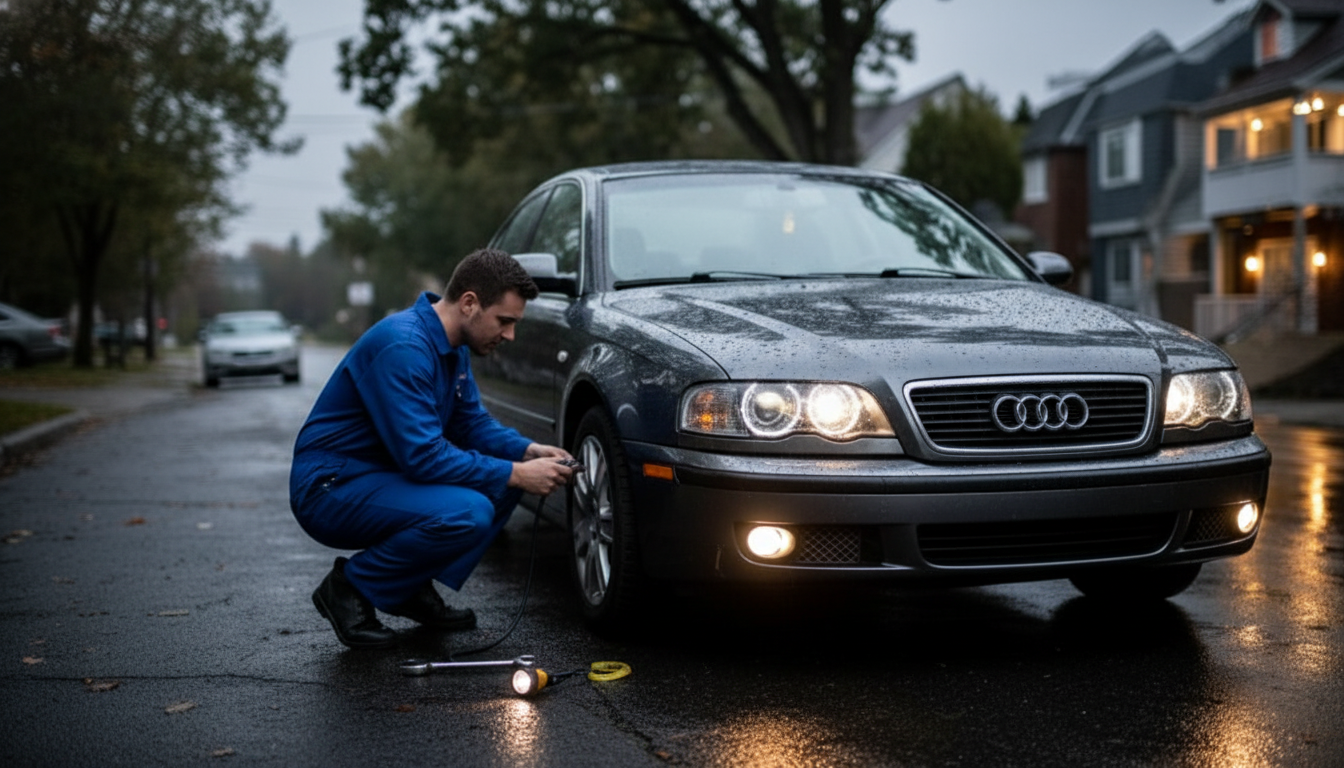
Why a Car Pulling to One Side Isn’t “Normal”
A car that drifts left or right can signal anything from a simple tire-pressure mismatch to worn suspension parts or brake drag. The goal is to sort the easy, low-cost checks from the problems that can quickly ruin tires—or reduce control when braking or in an emergency maneuver.
If you want a printable, step-by-step version of the checks below, see Why Is My Car Pulling to One Side? | Ultimate Guide to Solving Alignment Issues. If you’re deciding whether to repair now or sell/trade later, How to Value Your Car Like a Pro Before Selling or Trading can help you estimate what condition issues may cost you in negotiation.
What “pulling” really feels like (and why it matters)
Pull vs. drift vs. torque steer
- Pull: You must hold the steering wheel slightly off-center to keep the car straight on a flat road.
- Drift: The vehicle slowly wanders with your hands lightly on the wheel; road crown (the slope that helps drainage) and wind can exaggerate it.
- Torque steer: Common on some front-wheel-drive cars—hard pull under acceleration that settles down when cruising.
Why it matters
- Pulling can increase risk during braking and lane changes because the car is already “fighting” straight-line tracking.
- Even mild pull often accelerates tire wear (especially on the front tires), which can become expensive quickly.
- It can mask safety-critical issues like a sticking brake caliper, loose steering component, or impact damage.
Fast safety checks (10 minutes, basic tools)
- Confirm road conditions: Test on a level, low-traffic road. Avoid heavy crosswinds and heavily crowned lanes.
- Set tire pressure to the placard: Use the driver door-jamb pressure label (not the tire sidewall maximum). Match left-to-right pressures on the same axle.
- Quick tire inspection: Look for uneven wear, bulges, cuts, embedded objects, exposed cords, or mismatched sizes/brands across an axle.
- Wheel check: Scan for bent rims, missing wheel weights, or obvious impact damage after potholes/curbs.
- If the pull is sudden and severe: Slow down and stop safely. A failing tire, brake drag, or steering/suspension damage may be developing fast.
For tire safety basics and maintenance guidance, the NHTSA Tire Safety resources are a solid reference.
Tire-related causes (most common and easiest to fix)
Tires create the majority of “mystery pulls,” especially right after a rotation, replacement, or seasonal swap.
- Unequal tire pressure: A few PSI side-to-side can create a noticeable pull by changing rolling resistance and the tire’s shape.
- Conicity (tire pull): Some tires naturally generate lateral force. A classic test is swapping the front tires left-to-right (when safe/allowed) and seeing if the pull direction changes.
- Uneven tread wear: Feathering, cupping, or one-shoulder wear can steer the car even if pressures are correct.
- Mismatched tires across an axle: Different brands, tread patterns, sizes, or significantly different tread depths can cause the car to “hunt” to one side.
- Rotation as a diagnostic: If your tires aren’t directional/staggered, rotating front-to-rear can reveal whether the pull follows a specific tire.
Quick diagnostics: symptom → likely cause → next step
| Symptom | Likely cause | Next step |
|---|---|---|
| Pull started after tire change | Tire conicity or mismatched tires | Swap front tires left/right; if pull follows, replace the tire |
| Car pulls more on certain roads | Road crown or crosswind sensitivity | Retest on flatter road; check alignment if persistent |
| Steering wheel off-center but car mostly tracks straight | Front toe out of spec after impact | Get alignment; verify steering wheel centering during service |
| Pull with vibration at speed | Bent wheel or tire imbalance | Inspect wheel runout; rebalance or replace wheel/tire |
| Pull increases while braking | Brake drag or uneven braking force | Inspect calipers, pads, slides, hoses; service brakes |
For tire care and safety best practices, the Tire Industry Association offers additional guidance.
Alignment basics: toe, camber, caster (and what each does)
- Toe: Often the biggest driver of rapid tire wear and a “darty” or nervous feel. Small toe differences can cause a pull and an off-center wheel.
- Camber: If one side has more negative or positive camber than the other, the car can steer toward the side with the most positive camber. Camber problems may be tied to worn parts or ride-height changes.
- Caster: A major contributor to straight-line stability. Side-to-side caster imbalance can create a steady pull even if toe is correct.
- Steering wheel centering: A correct toe setting with a centered steering wheel helps reduce constant micro-corrections and uneven wear.
- When alignment alone isn’t enough: If alignment numbers won’t stay in spec, something is moving—usually a worn bushing, ball joint, tie-rod end, or bent part.
Brake and wheel bearing problems that mimic alignment issues
If the car pulls harder when braking—or after a long highway drive—brakes move to the top of the suspect list.
For brake safety and maintenance fundamentals, see the Brake Manufacturers Council.
Suspension and steering wear: the “alignment won’t hold” culprits
Step-by-step troubleshooting flow (from simplest to most involved)
When to stop driving and get immediate help
FAQ
Can low tire pressure cause a car to pull to one side?
Yes. Unequal pressure side-to-side changes rolling resistance and the tire’s shape, which can steer the car. Set pressures to the door-jamb placard and retest on a flat road.
Why does my car pull only when braking?
This commonly points to brake drag or uneven braking force, such as a sticking caliper, seized slide pins, or a collapsed hose. A noticeably hotter wheel on one side after a short drive is a strong clue.
Will a wheel alignment fix pulling every time?
Not always. Alignment corrects out-of-spec angles, but tire conicity, bent wheels, worn bushings/ball joints, or brake issues can still cause a pull even when the alignment numbers look good.















Leave a comment