Progressive Muscle Relaxation: 10-Minute Calm Reset
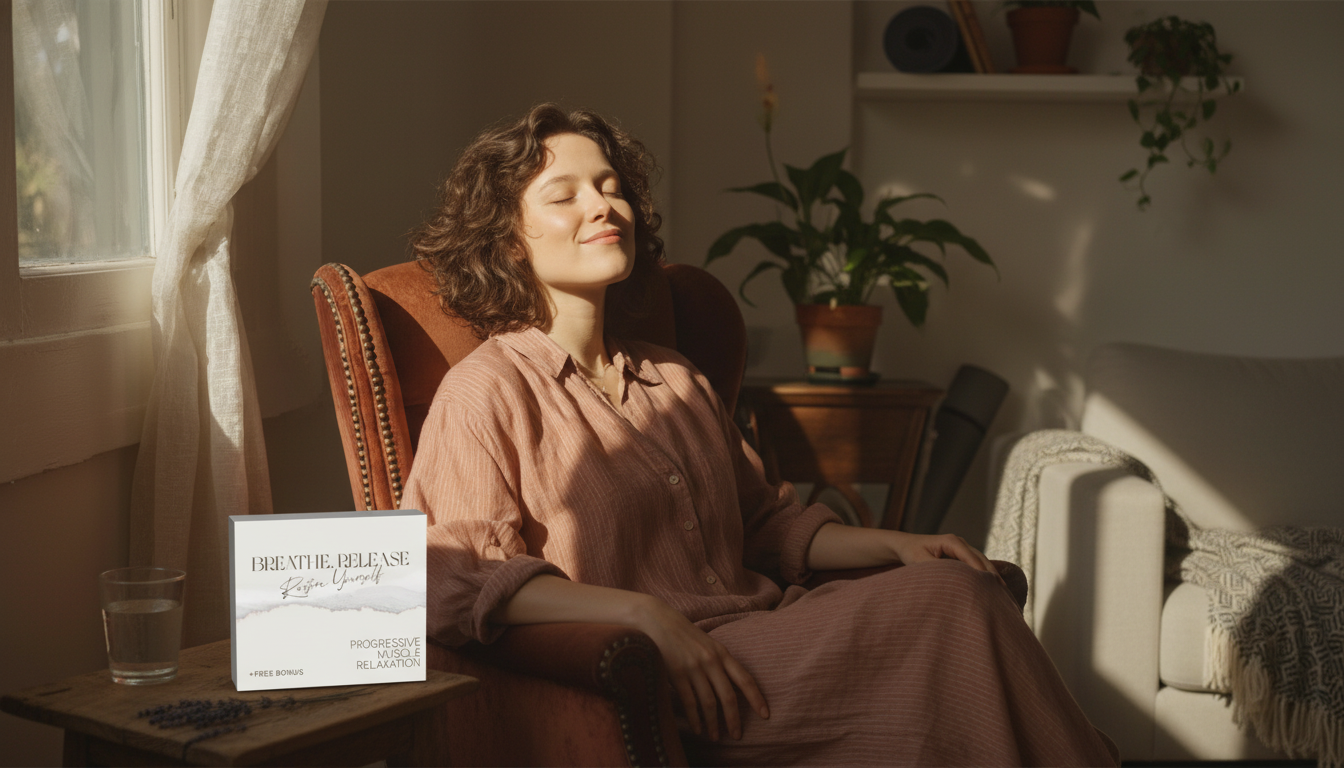
Breathe, Release, Restore: A Progressive Muscle Relaxation Routine for Calm and Grounding
Progressive muscle relaxation pairs steady breathing with intentional tension-and-release to help the body shift out of stress mode. This guided practice offers a simple way to soften tight muscles, quiet racing thoughts, and re-center during anxious moments—no special setup required.
Why the Body Holds Stress (and How Release Helps)
Stress often shows up physically before it becomes fully “mental.” You might notice jaw clenching, raised shoulders, shallow breathing, restless legs, or a tight chest. These aren’t just side effects—they’re part of the body’s protective response.
When muscles stay tense, the nervous system can interpret that tension as ongoing danger, even if the situation is actually safe. That can keep you keyed up, reactive, and mentally stuck in problem-solving mode.
A deliberate sequence of releasing muscle groups acts like a “safety signal” through the body. As the body softens, it often becomes easier for attention to settle and for thoughts to slow down. This makes progressive muscle relaxation useful as a quick reset during the day and as a wind-down routine before sleep.
What Progressive Muscle Relaxation Is
Progressive muscle relaxation (PMR) is a step-by-step method: you briefly tense a muscle group, then release it fully while noticing the contrast between “tight” and “soft.” Many people find that the contrast itself teaches the body what relaxation actually feels like.
Most routines move through the body in order (feet-to-head or head-to-feet) to encourage full-body downshifting. PMR also pairs well with slow breathing, calm cueing, and a comfortable posture—seated or lying down.
Consistency tends to matter more than duration. A short session done regularly often feels more effective than an occasional long session, because the body learns the pattern and starts to relax more quickly.
A 7–10 Minute Guided Sequence (Breathe → Tense → Release)
Use this rhythm throughout: inhale gently as you tense, then release on a longer exhale. Keep effort moderate—enough to feel the muscle engage, not so much that it hurts.
1) Settle in
Sit with feet on the floor or lie down. Let your hands rest loosely. Soften your gaze or close your eyes.
2) Find your breathing rhythm
Inhale through the nose for about 4 counts. Exhale for about 6 counts. Repeat twice, letting the exhale feel like a “letting go.”
3) Feet and calves
Curl your toes and tighten your calves for 3–5 seconds. Exhale and release completely for 10–15 seconds. Notice any tingling, warmth, or heaviness.
4) Thighs and hips
Tighten your thighs and lightly squeeze your glutes. Release and let the legs feel heavy, as if they’re sinking into the chair or mattress.
5) Belly and lower back
Gently draw the belly in (no straining). Release and allow the abdomen to rise naturally with the inhale. Let your lower back feel supported.
6) Hands and forearms
Make soft fists and tense the forearms. Release and feel the fingers lengthen. Notice whether your hands want to rest more open than before.
7) Shoulders and upper back
Lift your shoulders toward your ears. Exhale and let them drop away from the neck. If it helps, imagine the shoulder blades sliding down your back.
8) Face
Press lips together or scrunch facial muscles lightly. Release and relax the jaw, tongue, and the space around the eyes. Let your forehead smooth.
9) Finish
Take 3 slow breaths and do a quick scan for any area still gripping. On each exhale, soften it by 5–10%—no force, just permission.
How to Make It Work in Real Life (Desk, Commute, Bedtime)
PMR is flexible. The “best” version is the one you can actually do when stress hits.
Common Mistakes and Quick Fixes
A Simple Plan for Building a Calm Habit
Quick options for different moments of stress
| Situation | Time | Best focus areas | Goal |
|---|---|---|---|
| Midday overwhelm | 2–3 min | Shoulders, jaw, hands | Reduce physical tension fast |
| Pre-meeting nerves | 1–2 min | Face, shoulders, breath | Steady voice and attention |
| End-of-day shutdown | 7–10 min | Full body sequence | Transition out of work mode |
| Bedtime racing thoughts | 5–8 min | Legs, belly, jaw | Ease into sleep readiness |
Guided Practice to Support Consistency
If you’d like a repeatable routine you can return to, explore Guided Progressive Muscle Relaxation: Breathe, Release, Restore. For stress that’s connected to relationships and communication, you might also like the Mindful Dating Red-Flag Checklist and the Meaningful Conversation Starter Guide.
For additional background on relaxation techniques, the American Psychological Association overview of Progressive Muscle Relaxation (PMR) and Mayo Clinic’s guide to relaxation techniques for stress are helpful references.
FAQ
How often should progressive muscle relaxation be practiced?
Daily practice is ideal, but several times per week can still be beneficial. Even 5–10 minutes is enough to reinforce the skill, as long as it feels comfortable and sustainable.
Can progressive muscle relaxation help during a panic or anxiety spike?
Yes—use a shortened version with gentle tension and longer exhales, focusing on just a few areas like jaw, shoulders, and hands. If symptoms are severe, frequent, or feel unmanageable, it’s important to seek support from a qualified clinician.
Is it safe to do progressive muscle relaxation with injuries or chronic pain?
Skip any painful or injured areas and use lighter contractions where needed, or switch to breath-only relaxation for those muscle groups. If you’re unsure what’s safe for your condition, check with a medical professional or physical therapist.















Leave a comment