Eat Like a Local Anywhere: Authentic Travel Food Checklist
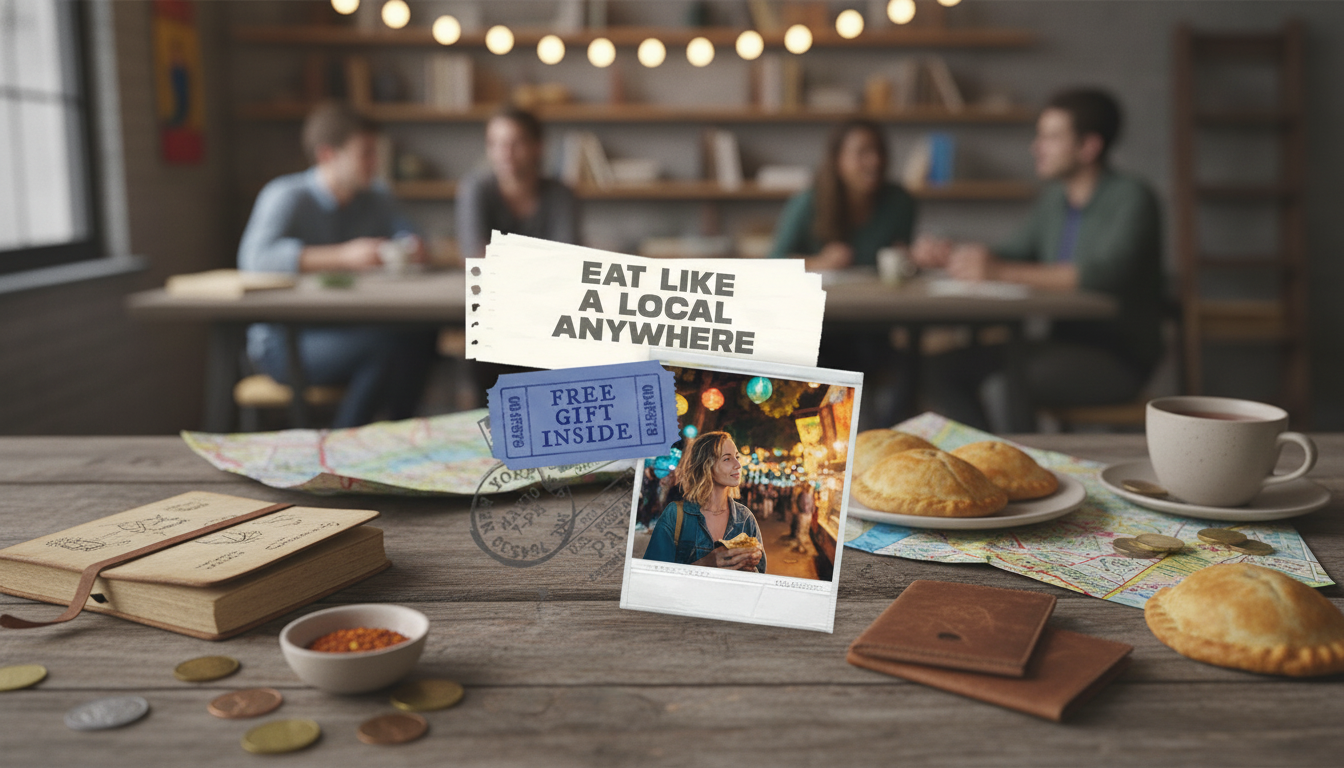
Eat Like a Local Anywhere: A Simple Checklist for Finding Authentic Food While Traveling
Great meals on the road usually come from small, repeatable habits: where to look, what to ask, and how to spot places locals actually rely on. This practical checklist helps travelers find regional specialties, avoid tourist traps, and eat confidently—whether the destination is a major city, a small town, or somewhere in between.
Start With a One-Minute Food Plan
A little structure keeps you from defaulting to the closest “recommended for tourists” spot when hunger hits.
- Pick two targets: one “must-try” local specialty and one everyday staple (a breakfast item, street snack, or common lunch plate).
- Match local meal times: arriving when residents eat increases the chance of fresher batches and a more local crowd.
- Choose today’s vibe: street food, market grazing, a family-run restaurant, or a single iconic dish.
- Set a simple budget band: it helps you skip the most visible, tourist-priced options without overthinking.
Where Locals Actually Eat (And How to Find It Fast)
The fastest route to “real” food is following everyday routines—work breaks, errands, commutes, and weekly shopping.
- Public markets: look for stalls with limited menus, fast turnover, and repeat customers.
- Business districts at lunchtime: lines often signal good value and consistent quality.
- Residential neighborhoods near transit stops: convenience supports reliable, everyday eateries.
- Bus and train stations (not inside the terminal): small nearby streets often have quick, local meals.
- Universities and hospitals: affordable canteens and surrounding spots can be surprisingly good.
Quick signals that a place is built for locals
| Signal | What it often means | Traveler tip |
|---|---|---|
| Short menu or one specialty | Focused cooking, faster prep, consistent results | Order the signature item; add one side or drink locals choose |
| Steady line that moves quickly | High turnover and fresh batches | Join the line; avoid empty places beside packed ones |
| Local language dominates the room | Primarily resident customers | Use a translation app for 2–3 key phrases; point to what others are eating |
| Simple decor, practical seating | Spending goes into food rather than aesthetics | Check cleanliness at the prep area and condiment station |
| Clear pricing posted | Everyday clientele expects transparency | Confirm portion sizes if prices seem unusually low or high |
| Many takeout orders | Locals rely on it regularly | Ask what travels well if heading to a park or hotel |
Ask Better Questions Than “What’s Good?”
Better questions get better answers—and they also nudge staff to steer you toward the food regulars actually order.
- Ask for the most common order: “What do most people get for lunch here?”
- Ask for what’s best right now: “Is there something that’s seasonal or especially good today?”
- Ask how locals customize: spice level, sauces, sides, add-ons, and the “normal” way to eat it.
- Ask for the neighborhood standard: “Where would you send a friend for this dish?”
- Use a three-part phrase: greeting + dish name + “please” to reduce friction and speed ordering.
Spot the Tourist-Trap Patterns Early
Some red flags show up before you ever sit down. Not every touristy-looking place is bad, but patterns matter.
- Overly broad menus spanning many cuisines can signal a place designed to please everyone rather than do one thing well.
- Aggressive hawking, wall-to-wall photo menus, or “best in town” superlatives can indicate high tourist dependence.
- Landmark proximity: prime locations can still be great, but quality often improves one or two blocks away.
- Translated-only menus with inflated pricing: compare with posted prices or local-language boards when possible.
- Volume-first cadence: if staff push you to sit immediately and order quickly, the priority may be churn over craft.
How to Use Maps and Reviews Without Getting Misled
Reviews are most useful when they confirm what your eyes already suspect: consistency, turnover, and a clear specialty.
- Filter by recent reviews and scan photos for local-language receipts, small menus, and normal portions (not only influencer-style plating).
- Look for repeatable patterns: “cheap,” “quick,” “regular spot,” “workers eat here,” and “always busy” are stronger than “cute atmosphere.”
- Ignore single extremes; prioritize consistency across many reviews and repeated mention of one dish.
- Save three options in the same neighborhood so you can pivot if one is closed or packed.
- Use street view to confirm it looks like an everyday spot: simple signage, local hours, modest seating.
Order Like a Local (Even When You Don’t Speak the Language)
You don’t need perfect pronunciation—just a simple method that reduces confusion and increases your odds of getting the house standard.
Safety and Etiquette That Keep Food Adventures Enjoyable
For additional guidance on reducing food and water risk while traveling, consult the CDC Yellow Book: Food and Water Precautions and the World Health Organization’s Five Keys to Safer Food.
A Printable Checklist for Every Destination
Helpful printables for confident ordering
- Eat Like a Local Anywhere – Travel Food Checklist (digital download)
- Meaningful Conversation Starter Guide (great for chatting with locals, vendors, and servers)
FAQ
What are the easiest ways to find authentic local food in a new city?
Start with markets, business districts at lunchtime, and residential streets near transit stops. Favor places with short menus, fast-moving lines, and repeat customers, and save a few nearby options so you can pivot if one is closed.
How can tourist traps be recognized without relying on reviews?
Look for very large multi-cuisine menus, aggressive hawking, unclear pricing, and dining rooms dominated by short-stay visitors. Walk one or two blocks away from the main landmark and compare the crowd, menu focus, and posted prices.
Is street food safe when traveling internationally?
It’s generally safer at busy stalls with high turnover and cooked-to-order items. Avoid food sitting lukewarm for long periods, practice hand hygiene, and choose based on your personal health needs and risk tolerance.















Leave a comment