Baby Milestones Guide: What to Expect & How to Help
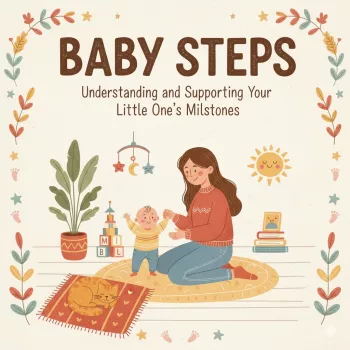
Baby Steps: Understanding and Supporting Your Little One’s Milestones
Milestones are a helpful way to notice how a baby is learning to move, communicate, and interact over time. Because every child develops on their own schedule, the goal is to spot steady progress, support skills through simple play, and recognize when extra guidance from a pediatric professional could help. When questions come up, trusted references like the CDC’s Developmental Milestones and American Academy of Pediatrics guidance on development can help you feel grounded in what’s typical—and what’s worth discussing.
What Milestones Are (and What They Are Not)
Milestones describe common skills many babies develop within a general age range, not a fixed deadline. It can help to think of them as “windows” rather than “due dates.”
- Development often happens in bursts; a quiet week can be followed by sudden new skills.
- Premature birth can shift expected timelines; clinicians often use an adjusted age for early milestones.
- Temperament, sleep, feeding, and opportunity for practice (like floor time and face-to-face interaction) can influence pacing.
A baby who takes longer to master one skill can still be developing beautifully overall. What matters most is a pattern of learning, trying, and gradually adding new abilities.
Four Key Areas to Watch
Looking at milestones in categories helps you see the “whole child,” not just one headline skill like walking or talking.
- Gross motor: big movements like rolling, sitting, crawling, pulling to stand, and walking.
- Fine motor: hands and fingers—grasping, transferring objects, pincer grasp, pointing, scribbling.
- Language and communication: cooing, babbling, gestures, responding to name, first words, following simple directions.
- Social-emotional and play: smiling, back-and-forth interaction, stranger awareness, imitation, pretend play beginnings.
Sometimes a baby “spends” energy on one area at a time—like focusing hard on movement, then suddenly ramping up babbling and gestures once that new mobility feels secure.
A Simple Check-In Rhythm That Doesn’t Become Stressful
A gentle routine makes tracking feel like noticing, not testing. Try brief observations during calm, alert moments.
- Use short weekly check-ins (2–5 minutes) rather than testing skills when your baby is tired or hungry.
- Look for “can do sometimes” before “can do consistently”; repetition turns new attempts into dependable skills.
- Jot quick notes on what you saw, what helped (positioning, toy type), and what changed over 2–4 weeks.
- Share observations with caregivers so routines stay consistent (for example, using the same simple words for common actions).
This approach keeps the focus on trends: Is your baby experimenting more? Recovering from wobbles faster? Showing new curiosity? Those are strong signals of healthy learning.
Common Milestones by Age Range (Quick Reference)
Use these as general guideposts; a wider range can still be typical, especially if progress is steady. If a skill is emerging, support the building blocks rather than drilling the final step. Also consider the whole picture—hearing, vision, muscle tone, and opportunities for play.
| Age range | Often emerging skills | Simple support ideas |
|---|---|---|
| 0–3 months | Turns toward sounds, briefly lifts head during tummy time, looks at faces | Tummy time in short bursts, high-contrast books, slow talking and sing-song routines |
| 4–6 months | Rolls, sits with support, reaches and grasps, laughs/babbles | Place toys just within reach, side-lying play, mirror time, narrate daily routines |
| 7–9 months | Sits independently, transfers objects, babbles with varied sounds, responds to name | Floor play with safe obstacles (pillows), peekaboo, name-and-point games |
| 10–12 months | Pulls to stand/cruises, pincer grasp, waves/claps, may say first words | Supported cruising along furniture, finger foods with supervision, gesture games (bye-bye, pat-a-cake) |
| 12–18 months | First steps progressing, points to request/share, uses several words, simple pretend | Ball rolling, “find it” games, read-and-point books, toy kitchen/phone pretend scripts |
| 18–24 months | Runs/climbs, combines words, follows 1–2 step directions, parallel play | Obstacle courses, choice questions (“cup or water?”), matching games, playdates with low pressure |
Practical Activities That Build Multiple Skills at Once
Supporting Growth Without Comparing
If you’re looking for broader, evidence-informed ways to support early development through everyday interaction, resources like the World Health Organization’s Care for Child Development highlight how play, responsiveness, and connection build skills over time.
When to Check In With a Pediatric Professional
A Parent-Friendly Digital Guide for Tracking and Play
If you want a clear, organized way to turn “Is this normal?” into simple next steps, Baby Steps: Understanding and Supporting Your Little One’s Milestones is a digital guide built around what to watch, what to try, and how to note progress over time. It’s designed to support steady growth with practical activities and straightforward “when to ask for help” signals.
And if your household includes a dog who may be adjusting to new routines, a separate support resource like Calm Paws: Ending Dog Separation Anxiety can help reduce stress at home—making it easier to protect the calm, predictable rhythms that benefit babies and caregivers alike.
FAQ
How can a parent tell the difference between a normal delay and a concern?
Look for overall progress over time and whether skills are building across more than one area. A single later skill can be typical, but regression or a persistent lack of progress over several weeks is worth discussing with a pediatric professional.
What activities help a baby reach milestones without overdoing it?
Short, playful routines—like floor time, reading, peekaboo, and reach-and-grasp games—work well when you follow your baby’s cues. Stop for breaks when your baby turns away, stiffens, fusses, or seems tired.
Should prematurity change milestone expectations?
Often, yes—many clinicians use an adjusted age (based on the due date) when looking at early milestones. Ask your baby’s clinician which timeline to use and when to bring up concerns.















Leave a comment