Kids’ Anger Tools: Calm-Down Skills and a Family Plan
Helping Kids Handle Anger with Confidence: Practical Strategies and Family Support
Anger is a normal emotion, but kids often need coaching to express it safely and effectively. With consistent language, simple regulation tools, and predictable follow-through, families can reduce blowups and build skills that carry into school, friendships, and home life. The goal is not to eliminate anger—it’s to help a child notice it early, calm their body, communicate needs, and repair after conflict.
What Anger Looks Like at Different Ages
Kids don’t “do anger” the same way across childhood. Knowing what’s developmentally typical makes it easier to respond with calm, clear limits instead of surprise.
- Toddlers and preschoolers: big feelings with limited words; anger often shows up as hitting, throwing, or collapsing into tears.
- Elementary-age kids: frustration about fairness, rules, and peer issues; anger may be verbal, oppositional, or avoidant.
- Tweens and teens: stronger need for autonomy; anger can mask embarrassment, anxiety, or social stress and may appear as sarcasm, shutting down, or explosive arguments.
- Development matters: a skill that works at age 5 (a calm-down corner) may need to evolve into private options for older kids (a walk, music, journaling).
Spot the Triggers Before the Blowup
Most “out of nowhere” explosions have a runway. The earlier you identify patterns, the more likely your child can catch anger before it peaks.
- Check the basics: hunger, poor sleep, transitions, screen time overload, and sensory stress can lower frustration tolerance.
- Look for patterns: time of day, specific siblings, homework moments, or public settings can reliably raise intensity.
- Teach a “body signal” scan: clenched fists, hot face, fast heart, tight chest, stomach knots—kids can learn to name these early cues.
- Use a neutral debrief: after calm returns, ask what happened right before anger spiked and what the child needed in that moment.
Calm the Body First: Quick Tools Kids Can Actually Use
When a child is flooded, reasoning doesn’t land well. Regulation starts with the body, then moves to words and problem-solving.
- Breathing options: “smell the soup, cool the soup” (slow inhale/exhale) for younger kids; box breathing or 4-7-8 for older kids.
- Grounding: name 5 things seen, 4 felt, 3 heard, 2 smelled, 1 tasted; helps shift attention from threat to safety.
- Movement breaks: wall pushes, jumping jacks, stretching, or a brisk walk to discharge adrenaline.
- Sensory supports: cold water on hands, a stress ball, weighted lap pad, or quiet corner—choose what fits the child’s preferences.
- Practice outside of conflict: tools work best when rehearsed during calm moments, not introduced mid-meltdown.
For more child-friendly emotional wellness guidance, resources from American Academy of Pediatrics — HealthyChildren.org and the CDC — Children’s Mental Health can be helpful for parents looking to build supportive routines.
Words That Reduce Power Struggles
During escalation, the goal is not winning the debate—it’s helping your child feel safe enough to regain control. Short, repeatable phrases work better than lectures.
- Validate without giving in: “You’re really mad. It’s okay to be mad. It’s not okay to hit.”
- Offer two safe choices: “Do you want space on the couch or a walk to the mailbox?”
- Use short scripts during escalation: long explanations can feel like criticism when a child is flooded.
- Name the need: “Sounds like you needed more time” or “You wanted it to be fair.”
- Avoid labels: replace “You’re being rude” with “That tone feels hurtful—let’s try again.”
Family Anger Plan: Clear Limits, Predictable Repair
A family anger plan turns “Don’t get mad” into a workable routine. It also reduces improvising in the moment, when everyone’s stressed.
Simple Anger Plan for Home
| Moment | What the Child Can Do | What the Adult Does | Goal |
|---|---|---|---|
| Early warning signs | Name the feeling; pick a tool (breathing, drink of water, squeeze ball) | Notice and praise the cue (“Good catch—take your pause”) | Prevent escalation |
| Anger spikes | Move to a safe space; reduce talking; use grounding or movement | Keep everyone safe; use short scripts; stay nearby if needed | Regain control |
| After calm | Share what happened; identify trigger; choose a better plan | Debrief gently; teach one skill; collaborate on next step | Build insight |
| Repair | Apologize; fix or replace; practice a redo | Guide restoration; reconnect with warmth | Restore trust |
Confidence-Building: Teach Skills, Not Just “Stop”
Evidence-based stress and emotion resources from the American Psychological Association (APA) can also support adults who want to model calmer coping during conflict.
When Anger Might Signal Something More
A Ready-to-Use Resource for Parents and Caregivers
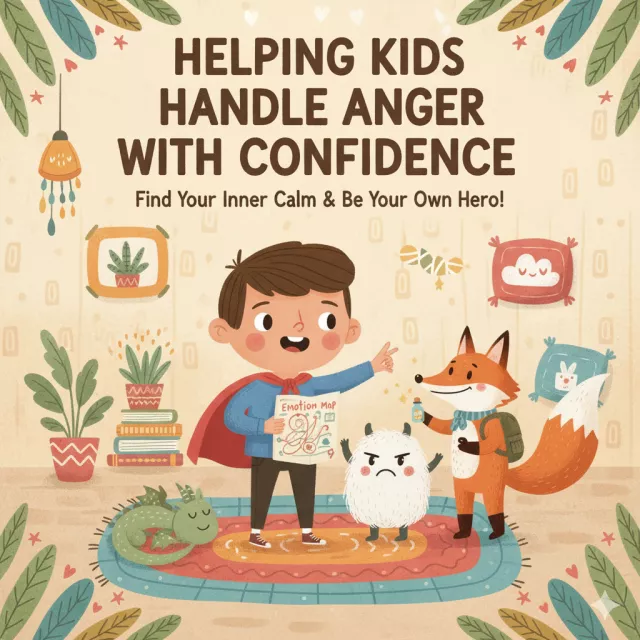
If you want a printable, on-the-go toolkit with scripts, calming tools, and a family plan you can keep on your phone, see the Helping Kids Handle Anger with Confidence Guide (digital download).
More digital guides (in stock)
- Calm Paws: Ending Dog Separation Anxiety – Ultimate Guide to Calming Your Dog’s Anxiety
- How to Value Your Car Like a Pro Before Selling or Trading – Ultimate Guide to Car Valuation
FAQ
What should a parent do during a child’s anger meltdown?
Prioritize safety first and keep your language short and steady. Coach a simple pause routine (space, breathing, grounding) and save problem-solving for after your child is calm.
How can kids express anger without hurting others?
Set clear limits (no hitting, breaking, or threats) and teach replacement actions like squeezing a stress ball, stomping feet in a safe place, or using a simple sentence to ask for space. Follow up with repair after conflicts so kids learn responsibility without shame.
When is anger a sign that a child needs professional help?
Seek professional support if anger is frequent, escalating, or involves threats of self-harm, persistent aggression, school incidents, or unsafe behavior. It’s also wise to consult a pediatrician or therapist when anger may be connected to anxiety, ADHD, trauma, bullying, or chronic sleep issues.















Leave a comment