Fast Stress Relief: 1–10 Minute Calm Reset Routine

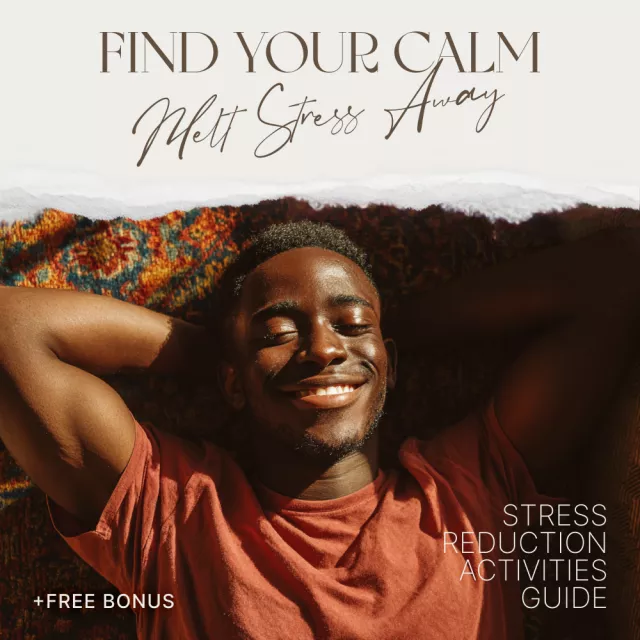
Find Your Calm: Simple Ways to Melt Stress Away
Stress doesn’t always arrive with warning—and it often lingers in the body long after the moment has passed. Small, repeatable relaxation habits can interrupt that cycle, lower tension, and make daily life feel more manageable. The ideas below focus on simple stress reduction activities that fit into real schedules, from 60-second resets to longer mindfulness routines.
Stress can show up as physical tension, mental overload, or a short fuse—and it’s not a character flaw. It’s a nervous system response. Learning a few reliable “downshift” tools helps you recover faster, steady your mood, and protect sleep and focus over time. (For a deeper look at how stress affects the body, see the American Psychological Association’s overview.)
What stress looks like in daily life
Stress isn’t always dramatic. Often it’s subtle, repetitive, and easy to normalize until it starts draining energy.
Common body signals
- Tight shoulders or jaw, shallow breathing, headaches
- Stomach fluttering, nausea, or “wired” appetite changes
- Fatigue that doesn’t match your workload
Common mind signals
- Racing thoughts, irritability, trouble focusing
- An “always on” feeling even when you sit down
Behavior clues
- Scrolling to avoid tasks or emotions
- Snapping at others, procrastinating, disrupted sleep
A helpful reframe: the goal isn’t to eliminate stress. The win is building faster recovery and a steadier baseline calm—so stress passes through instead of setting up camp.
A quick check-in: name it, locate it, soften it
This mini practice takes under a minute and works best before stress escalates.
- Name it in one sentence. Example: “I’m tense about tomorrow’s meeting.”
- Locate it in the body. Check chest, throat, belly, forehead, shoulders.
- Soften it with one physical cue. Drop the shoulders, unclench the jaw, relax the tongue, open the hands.
- Add a simple boundary. Choose one small next step only: send one email, set a 10-minute timer, or drink water.
This sequence turns vague pressure into a concrete signal you can respond to—without getting pulled into an all-or-nothing productivity spiral.
Fast stress melts (1–5 minutes) for busy moments
When time is tight, the best tool is the one you’ll actually do. Pick one option and repeat it daily until it feels automatic.
- Physiological sigh (2 rounds): Inhale through the nose, take a small top-up inhale, then do a long slow exhale. Repeat twice.
- Box breathing (60–90 seconds): Inhale 4, hold 4, exhale 4, hold 4. Reduce counts if uncomfortable.
- Cold water reset (30–60 seconds): Cool rinse on wrists or splash the face to interrupt spiraling arousal.
- Grounding scan (90 seconds): Name 5 things seen, 4 felt, 3 heard, 2 smelled, 1 tasted.
- Micro-stretch sequence (2 minutes): Neck circles, shoulder rolls, chest opener, forward fold.
Pick-a-moment calm menu (match the tool to the situation)
| Moment | What it feels like | Try this | Time |
|---|---|---|---|
| Before a meeting | Racing thoughts, tight chest | Physiological sigh + shoulders down | 1–2 min |
| Mid-afternoon slump | Foggy focus, restless energy | Brisk walk to a window + 10 deep breaths | 3–5 min |
| After an argument | Heat in face, urge to react | Grounding 5-4-3-2-1 + drink water | 2–4 min |
| At bedtime | Mind won’t quiet | Box breathing + body scan from feet upward | 4–8 min |
Mindfulness without pressure: simple practices that stick
Mindfulness doesn’t have to be long, silent, or perfect. Even brief attention training can help reduce reactivity and make stress feel less sticky. (For evidence-based guidance, see the National Center for Complementary and Integrative Health.)
- One-breath reset: Feel the full inhale and full exhale once, then return to the next task.
- Sound focus: Listen for the farthest sound, then the nearest sound. Repeat for one minute.
- Mindful routine anchor: Choose one daily action (shower, brushing teeth, first sip of tea) and practice full attention.
- Noticing thoughts: Label gently (“planning,” “remembering,” “worrying”) and come back to sensations.
- Use “soft eyes”: Widen the visual field to reduce threat-focus and mental narrowing.
Movement-based stress reduction (no workout required)
Stress is physiological, so movement often helps faster than thinking your way out of it.
Relaxation routines for evenings and sleep
Nighttime stress often shows up as “tired but alert.” A consistent wind-down teaches the body that it’s safe to power down. If stress has been affecting daily functioning, the National Institute of Mental Health also offers practical coping resources.
Make calm a habit: a simple daily plan
A guided way to practice (and keep momentum)
For step-by-step prompts you can follow without overthinking, explore Find Your Calm: Simple Ways to Melt Stress Away | Stress Reduction Activities Guide for Daily Relaxation & Mindfulness.
And if household stress includes a worried pup, Calm Paws: Ending Dog Separation Anxiety offers a structured approach to easing separation stress and building steadier routines.
When stress feels overwhelming
FAQ
What is the fastest way to calm down when stress spikes?
Try a 60–120 second physiological sigh or box breathing, then add one “soften” cue like dropping your shoulders or unclenching your jaw. Finish with one quick grounding step (like naming five things you see) to help your attention stabilize.
How many minutes of mindfulness do you need for it to help?
Even 1–5 minutes can help, especially when you practice consistently. Anchoring it to an existing routine—like your first sip of coffee or brushing your teeth—makes it easier to stick with.
What are simple stress reduction activities you can do at home?
Simple options include a body scan, progressive muscle relaxation, gentle stretching, a short walk, a worry-list journaling session, calming music, or a mindful tea/coffee ritual. Choose one that feels doable and repeat it daily for better results.















Leave a comment